Showing posts with label Garde Manger Knowledge. Show all posts

Tuesday, November 26, 2019

4 Types of Pate That You Should Know as A Chef


Garde Manger Knowledge: Pate Knowledge


What is Pate?

  • Pâté  is the French term "paste." It is traditionally served baked in a crust or molded as a terrine and duck liver or goose liver as the main ingredient.
  • Pate is a paste, pie, or loaf consisting of a forcemeat such as liver, poultry, meat, fish, etc.
  • Can be served hot or cold.
  • The most famous pate is "pâté de foie gras", made from the livers of fattened geese.
Pate
Pate


Equipment and Utensil for Pate

Terrine Mold
Types of Terrine Mold/ Loaf-Terrine Mold
Read: Mother Sauces


There are 4 types of Pâté

  1. Pâté en croûte
  2. Pâté en terrine
  3. Pâté en roulade
  4. Mousseline pâté


1.1. Pâté en croûte

  • A forcemeat baked in a crust of pastry dough.
  • Liver as the main ingredients such as Duck liver, Goose liver (foie gras), or Chicken liver.
  • Additional Ingredients such as chicken, beef ox tongue, nuts, vegetables, cured meat, cognac, cream, gelatin powder (aspic jelly), etc.
  • Can be served cold or hot (without gelatin)
  • Cooking method: Baking with the water bath method.
  • Pâté en croûte is baked with the insertion of "chimneys" on top: small tubes or funnels that allow steam to escape, thus keeping the pastry crust from turning damp or soggy. 
  • Baked pâté en croûte usually develops an air bubble under the crust top as the meat mixture shrinks during baking; this is traditionally dealt with by infusing semi-liquid aspic in the hollow space before chilling.

Pâté en croûte
Pâté en croûte
Read: Popular Pasta Sauces


1.2. Pâté en terrine

  •  A forcemeat baked in a form or vessel without a pastry crust.
  • The mixture wrapped in suet or not and layered in a ceramic or steel loaf-terrine mold, cooked in the oven with a water bath method without pastry crust, and cooled
  • Sometimes an infused gelatin (aspic jelly) is set on top for a decorative effect that also adds an additional layer of flavor.
  • Served cold.
  • The main ingredients can be meat, liver, poultry, seafood
  • Vegetable terrine as special dishes or vegetarian dishes.

Pâté en terrine
Pâté en terrine
Read: Types of Breakfast


1.3. Pâté en roulade

  • Forcemeats wrapped/rolled in wrapping material (not edible and edible material but not chicken or poultry skin)
  • Wrapping material: Plastic wrapped, Aluminium foil, Natural wax paper, Cured meat, etc.
  • The main ingredients such as meat, liver, poultry, and fish
  • Vegetable roulade as special dishes or vegetarian dishes
  • Cooking method: Baking or Steaming method
  • Can be served cold or hot.

Pâté en roulade
Pâté en roulade
Read: Types of Cake Decoration


1.4. Mousseline pâté      

  • The smoothest and most refined form of pâté made from an emulsion of puréed raw meat, eggs, and cream
  • The mixture looks like mousse, light, airy, and delicate.
  • The main ingredients such as meat, poultry, seafood, or liver
  • Cooking method: Baking or Steaming 
  • Can be wrapped in wrapping material or layering in a ceramic terrine mold or ceramic mini- cocotte mold
  • Can be served hot or cold.

Mousseline pâté
Mousseline pâté


4 Parts of Pate

  1. Forcemeat
  2. Internal garnishes
  3. Liners and wrappers
  4. Sealers


1.1. Forcemeat

Forcemeat: This emulsified mixture of ground meat and fat makes up the body of the pâté and the forcemeat consist:  
  • Primary meats: Meats that must total more than half the pâté forcemeat’s weight. 
  • Secondary meats: Meats added to a pâté forcemeat, to add a rich mouthfeel and to lighten the color of the finished product.
  • Fats for Pâté Forcemeats: Such as chicken fat, turkey fat, or duck fat  
  • Seasonings for Pâté Forcemeats: Salt, spices, herbs, aromatic vegetables, meat glazes, alcoholic beverages or cream, etc. 

Ground Meat
Ground Meat

1.2. Internal garnishes

Pieces of food are placed within the forcemeat to add texture, flavor, and visual interest.
  • Cured and smoked meats 
  • Nuts, beans,  dried fruits, and vegetables 
  • Mushroom or Truffles 
  • Marinated raw meats and poultry 
  • Chicken tender and boiled beef ox tongue
  • Seasoned livers.

Pate Garnishes
Internal Garnishes
Read: Sandwiches


1.3. Liners and Wrappers

  • A pâté forcemeat is usually contained in some form of wrapper or liner. 
  • Only mousselines pate are not wrapped or lined
  • Pastry dough/Pate dough wrappers for pâtés en croûte 
  • These doughs must be sturdy enough to hold up to heavy forcemeats and the steam, juices, and rendered fat they produce.
  • Pate dough is consists: Flour, Unsalted butter, Salt, Water, and Egg.
  • Leaf vegetables, Nori seaweed sheet, Cured meat, Smoked beef, Smoked turkey breast can be as a liner.

Pate Dough
Pate Dough as A Wrapper


Pate Liner
Pate Liner
Cured meat, Leaf vegetable, and Nori as A Liner
Read: Compound Butter


1.4. Sealers

  • After a pâté product was baked and cooled, it was sealed with a semisolid fat to preserve it. 
  • Modern pâtés and terrines are now more often sealed with liquid aspic for presentation purposes.
  • For pâtés en croûte, use flavorful, clear liquid aspic to fill the gap and adhere the crust to the forcemeat. 
  • Lard is the traditional material used to seal terrines for extended storage. 

Pate Sealers
Sealers


Pâté Accompaniments 

  • Bread
  • Crackers
  • Flavored mustard 
  • Cumberland sauce 
  • Mayonnaise sauces 
  • Relishes 
  • Fruit or vegetable salsas 
  • Balsamic vinegar glazes 
  • Pickled vegetables 
  • Wine reduction (red wine or port wine)
  • Vegetables dressed in vinaigrette 


Pate Presentation Styles

  • Presented on a platter for buffet service such as hors d' ouvre, canape, buffet platter. 
  • Individually portioned for plate services such as appetizer and amuse-bouche.

Pate Presentation
Pate Presentation


Share our Links

Sitemap
Previous: Liquid Infusion,
Next: Pasta Shapes, 
Culinary Training Program, 
AMAZON Chef's Store, 
PDF Presentation,

Thursday, November 21, 2019

How to Make The Liquid Infusion in Culinary Knowledge


Garde Manger Knowledge: Liquid Infusion


What is Liquid infusion?

  • Infusion is an extraction of flavor from one or more ingredients and infused (steeped or injected) into another ingredient, usually a liquid such as water, vinegar, syrup, milk, cream, stock, and oil.
  • Flavor ingredients such as Rosemary, Thyme, Star anise, Chili, Fruit or vegetables
  • Infused oils or other liquid are the way to cut food waste and preserve precious flavor
  • E.g. Garlic oil, Rosemary oil, Chili oil, Tarragon vinegar, Lemon vinegar, lemon water, lime water, Tropical fruit water, etc.

Infusion Liquid
Infusion Liquid

  • To minimize risk and further prolong the shelf life of infused oils & vinegar, containers, and utensils used in making infused oils should be clean, dry, and sterilized. 
  • Oils & vinegar should always be kept sealed, away from direct light, and refrigerated. 
  • The process of an oil or fat going rancid is an oxidation process. 
  • Sealed containers keep oxygen contact to a minimum, The dark-colored containers prevent light from affecting the oil and extend the useful life.


Infusion Method

1. Cold Infusion (Blender Method)

  • Best used with high moister ingredients such as herbs, roots, citrus zest, and fresh Chile peppers 
  • These products may add moisture to the oil making it ripe for spoilage, these infusions must be refrigerated immediately after preparation. 


2. Hot Infusion (Direct Heat or Steeping)

  • Best with dry spices, some roots, and woody herbs
  • The heating of the liquid and flavor ingredients makes the finished product more sanitary and less prone to spoilage.


Equipment and Utensil

  • Natural waxed paper
  • Glass jar with a tight-fitting lid
  • Spoon
  • Stainless steel saucepan 
  • Cheesecloth 
  • Bowl 
  • Labels and permanent marker
  • Dark-colored glass bottles with dropper tops or cap tops for storing the finished product
  • Mortar and pestle 
  • Wire strainer 
  • Funnel 

Equipment and Utensil
(Jars, Blender, Saucepan, Bowl, Wax Paper, Spoon and Cheesecloth)


Four Types of  Infusing Liquids

  1. Infusing Oil (Olive oil, Avocado oil, Coconut oil, etc.)
  2. Infusing Vinegar (White vinegar, Red wine vinegar, Apple cider vinegar, etc.)
  3. Infusing Spirit (Liqueur or Liquor).
  4. Infusing Water and Other Liquid ( cream, milk, stock, sugar syrup, etc.)


1. Infusing Oil

  • Olive oil is the best type of oil for infusion and works really well especially if you prefer using it for drizzling over finished dishes.
  • Flavoring with herbs, spices, or root vegetables


Three Methods Oil Infusion

  1. Cold Method
  2. Double Boiler Method
  3. Stove Top Method

Infusing Oil
Infusing Oil

  • Types of oil: Olive oil, coconut oil, avocado oil, etc.
  • Flavoring ingredients: Fresh herbs and spices (Parsley, Chives, Cilantro, Ginger, Turmeric, etc.)


Method

  • Combine the oil and the flavoring ingredients in the blender and blend at high speed until the product is liquefied. 
  • Leafy green herbs can be quickly blanched in boiling water and then shocked in cold water to help preserve their color and give the finished oil a bright green appearance. 
  • Roots such as horseradish, ginger, turmeric, garlic, etc. should be grated or chopped to fully extract flavor in the blender. 
  • Let infusion “sit” under refrigeration for several hours or overnight.
  • Strain the purée through cheesecloth (allow the oil to drip, do not push purée.)
  • Store infused oil in sterilized glass bottles, cover tightly and refrigerate.

Cold Oil Infusion
Cold Oil Infusion

Read 3 Types of Clear Soup You should know


1.2. Double Boiler Oil Infusion


Suitable For:

  • Types of Oil: Olive oil, Coconut oil, Salad oil, Corn oil, Avocado oil, etc.
  • Flavoring ingredients: Dried herbs and spices


Method

  • Place your herbs or spices and oils into a bowl
  • Put the bowl on a double boiler (water-filled saucepan)
  • Simmer for 30-60 minutes, keeping a careful eye on the amount of water.
  • Keep the temperature of the oil between 61-75 degrees Celsius
  • When the infusion process is finished, straining and bottling.

    Double Boiler Oil Infusion

    Read: 22 Most Popular Sandwiches


    1.3. Stove Top Oil Infusion


    Suitable for:

    • Types of Oil: Olive oil, Coconut oil, Salad oil, Corn oil, Avocado oil, etc.
    • Flavoring ingredients: Dried herbs and spices


    Method

    • Place and combine oil and herbs or spices in a jar and sealed
    • Place the jar in the saucepan that has been filled ¼ full of water (place some jar lids on the bottom of the pan or small towel to protect the jar from breaking).
    • Simmer for 2-4 hours, keeping a careful eye on the amount of water, and just add hot water if the water level runs low, 
    • Monitor the temperature oil between 61-75 degrees Celsius.
    • When time is up, remove the jar from the saucepan and allow it to cool before straining.
    • straining and bottling.

    Stove Top Oil Infusion

    Read: What’s the Difference Between Simmering and Boiling?


    2. Infusing Vinegar

    • Distilled white vinegar works well in infusions with delicately flavored herbs. 
    • Apple cider pairs well with fruit infusions. 
    • Wine and champagne combine well with subtly flavored herbs and light tasting fruits.
    • Red wine vinegar pairs well with strong-flavored herbs


    Suitable for

    • Types of vinegar: Distillate Vinegar, Red wine vinegar, Apple cider vinegar, etc.
    • Flavoring ingredients: Fruits, vegetables, herbs, and spices


    Without Heat Method

    • Place and combine vinegar and flavoring ingredient in a glass jar
    • Let infusion “sit” in a cool dark place for 3-4 weeks 
    • Every 3 days, roll the jar in your hands to help mix the contents and release the herbal constituents into the vinegar
    • When the infusion process is finished, straining and bottling.


    Heat Method

    • Double Boiler Method 
    • Stove Top Method

      Infusing Vinegar


      3. Infusing Spirit (Liquor and Liqueur)

      Suitable For

      • Types of Spirit: Vodka, Rum, Whisky, Brandy, Gin, etc.
      • Flavoring ingredients: Berries, Orange, Lime, Lemon, Pineapple, Grape Fruit, Apple, etc.


      Method

      • Combine liquor and flavoring ingredients in a large and clean jar or container.
      • Place in a cool, dark location such as a pantry and allow to infuse for three to five days, shaking each day to blend flavors.
      • Strain the infusion and store them in the original vodka bottle or a clean bottle or container.

        Infusing Spirit
        Infusing Spirit

        Read: Thick Soup


        4.  Infusing Water and Other Liquids

        Method

        • Combine the liquid, such as water, milk, cream, sugar syrup, or stock, with the flavoring ingredient over moderate heat. 
        • When the liquid is a boil, remove the pan from the heat, cover, and let the mixture steep until the liquid is richly flavored, usually 30 minutes to an hour. 
        • Strain the liquid and press on them in the strainer to extract all the liquid.


        Note: 

        • For infusing the milk, the temperature of  milk between 75-85 degree Celsius (don't boil the milk)
        • For infusing water, you can use portable or hot water and flavoring ingredients such as fruits, vegetables, herbs, or spices

            Infusing Water
            Infusing Water and Other Liquid


            Share our Links

            Sitemap, 
            Previous: Dipping Sauces
            Next: Types of Pate,
            Culinary Training Program,
            AMAZON Chef's Store,
            PDF Presentation,

            Monday, November 18, 2019

            The Top 12 Famous Dipping Sauces From Around The World


            Garde Manger Knowledge: Dipping Sauces


            What is Dipping Sauces?

            • A dip or dipping sauce is a common condiment for many types of food. 
            • Dips are used to add flavor or texture to the food, such as pita bread, dumplings, crackers, cut-up raw vegetables, fruits, seafood, cubed pieces of meat and cheese, potato chips, tortilla chips, and falafel.
            • Dips can be served hot or cold,  always accompany other foods, and often use mayonnaise, sour cream, cream cheese base, or mashed bean.

            Dipping Sauces
            Dipping Sauces


            Texture of Dips

            • The dip must be thick enough to stick to the items used as dippers. 
            • Proper consistency means thickness at serving temperature.
            • Most dips become thicker when held in the refrigerator.
            • A dip is normally thicker than salad dressing and thinner than spread, but should not be so thick as to break a chip or cracker.

            Dipping Sauces
            Dipping Sauces

            10 Famous Dips From Around The World

            1. Salsa Cruda: Spanish and Mexican dishes
            2. Cheddar Cheese Sauce: American and Mexican dishes
            3. Sambal (Spicy chili sauce): Indonesia, Malaysia, and Brunei dishes
            4. Guacamole - Mexican dishes
            5. Nam Jim Jaew (Thai spicy sauce): Thai dishes
            6. Blue cheese dip: French and Western dishes
            7. Red Lentil Dal: Indian dishes
            8. Tartar Sauce - United Kingdom
            9. Hummus: Arabic and Mediterranean dishes
            10. Baba Ghanoush: Arabic and Mediterranean dishes
            11. Sambal Kacang (Peanut Sauce):  Indonesian, Malaysia, and Brunei dishes
            12. Spinach Artichoke Dip: American 


            Dips and Their Ingredients

            1. Salsa Cruda

            • Suitable For: Tortilla chips, Tacos and Mexican dished condiment, 
            • Ingredients: Dice tomato, Chopped onion, Minced garlic,  Chopped cilantro, Lime juice, Chopped jalapeno, Tomato juice (additional), and Salt.
            • Method: Mix all of the ingredients.

            Salsa Cruda
            Salsa Cruda
            • Suitable For: Tortilla chips, Potato chips, Tacos, Burger, Deep fried chicken, and Mexican dishes condiment.
            • Ingredient: Bechamel, Grated American cheddar cheese, Cayenne pepper powder.
            • Method: Make bechamel and add Cheddar cheese and Cayenne pepper powder.

            Cheese Sauce Sauce
            Cheddar Cheese Sauce

            3. Sambal

            • Suitable For: Deep fried chicken, Roasted chicken, Deep fried and Grilled fish, Tempe, Tofu, Raw vegetables or Blanched vegetables, and as Indonesian dishes condiment
            • Kinds of Sambal: Sambal terasi, Sambal matah, Sambal Hijau, Sambal kemiri, etc.
            • Sambal Terasi, Ingredients: Red chili, Shallot, Garlic, Tomato and Shrimp paste, 
            • Method:  Blend or mash the ingredients and saute all of the ingredients

            Sambal
            Sambal
            Sambal terasi, Sambal matah and Sambal hijau
            • For: Tortilla chips, Nachos, Tacos, and Mexican dishes condiment.
            • Ingredients: Mashed avocado, Chopped cilantro, Lime juice, Diced tomato, Chopped jalapeno (additional), and salt.
            • Method: Mix all of the ingredients

            Guacamole
            Guacamole


            5. Nam Jim Jaew

            • Suitable For: Grilled or Roasted meat, Deep-fried or Grilled fish, Grilled beef, Roasted beef,  Deep-fried or Roasted chicken, Spring roll, or as Thai dishes condiment. 
            • Ingredients: Toasted rice flour, Chopped cilantro, Red chili flakes, Palm sugar, Chopped shallot, Sliced scallion, and Fish sauce.
            • Method: Mix all of the ingredients.

            Nam Jim Jaew
            Nam Jim Jaew
            • Suitable For; Deep fried chicken, Fish and Frog leg, Chicken wing, Grilled steak, Crudities, and Chips
            • Ingredients: Crumble Gorgonzola cheese, Mayonnaise, Cream cheese, Cream, Salt, and Cracked black pepper.
            • Method: Mix all of the ingredients.

            Blue Cheese Dip
            Blue Cheese Dip

            7. Red Lentil Dal

            • Suitable For: Naan bread, Paratha bread or you can eat with rice.
            • Ingredients: Red lentil, oil for sauteing,  chopped garlic, Chopped onion, Minced ginger, Turmeric powder, Coriander powder, Cumin seeds, Garam masala, Diced tomato, Coconut milk or Plain yogurt, Water or stock, Red chili flakes, Salt, Cilantro or Fresh spinach.
            • Method: Cook all of the ingredients

            Red Lentil Dal
            Red Lentil Dal

            8.Tartar Sauce

            • Suitable For:  Fish & Chips, Deep-fried calamari,  Fish finger, Chicken nugget, etc.  
            • Ingredients: Mayonnaise, Chopped gherkin, Capers, Chopped onion, Chopped parsley/ Chives,  and Chopped hard-boiled egg (Japanese tartar sauce).  
            • Method: Mix all of the ingredients.
            Tartar Sauce
            Tartar Sauce
            • Suitable For: Pita bread, Flatbread, Crudities, Ryvita (dark cracker), Breadstick, etc.
            • Ingredients: Boiled chickpeas, Olive oil, Tahini, Minced garlic, Lemon juice, Sumac (additional), Salt and White pepper powder
            • Method: Blend all of the ingredients by food processor.
            Hummus
            Hummus

            Read: 6 Shapes of Pasta Categories


            10. Baba Ghanoush

            • Suitable For: Pita bread, Crudites, as side dishes  or as Condiment in Arabic buffet
            • The Ingredients are Grilled eggplant, Lemon juice, Tahini, Minced garlic, and salt. 
            • Typically you have to char the eggplant on a grill or over the flame of a gas stove or you cook in the oven.
            • Olive oil, parsley, and pomegranate as the garnish
            • Method: Mash the cooked eggplant and combine with the rest of the ingredients

            Baba Ghanoush
            Baba Ghanoush

            11. Sambal Kacang/ Peanut Sauce

            • Suitable For: Satay, Vegetable fritter, Grilled chicken, Gado - Gado (Indonesian mix salad), Deep-fried tofu, etc.
            • Ingredients: Ground fried peanut, Blended red chili, Kecap Manis (sweet soy sauce), Chopped garlic, Chopped shallot, Tamarind juice, Sugar, Water, and Salt.
            • Method: Cook and boil all of the ingredients.

            Sambal Kacang
            Sambal Kacang

            12. Spinach and Artichoke Dip

            • Suitable For: Cracker, Bread, Chips, Tortilla chips, Nachos, etc.
            • Ingredients: Cream cheese, Cooked artichokes, Sour cream, Cream cheese, Minced garlic, and Parmesan cheese.
            • Method: Combine all of the ingredients and bake in the oven.
            Spinach Artichoke Dip
            Spinach Artichoke Dip


            Share our Links

            Sitemap, 
            Previous: Dairy Product Dressing,
            Next: Liquid Infusion,
            Culinary Training Program,
            AMAZON Chef's Store,
            PDF Presentation,

            Wednesday, November 13, 2019

            How to Create Dairy Product as Salad Dressing


            Garde Manger Knowledge: Dairy Product Dressing


            What is the Dairy Product?

            • Dairy Products are a type of food produced from or containing the milk of mammals.
            • Primarily produced from mammals such as cows, buffaloes, goats, sheep, camels.
            • Such as milk, cheese, yogurt, cream, cream cheese, butter, creme fraise, etc.
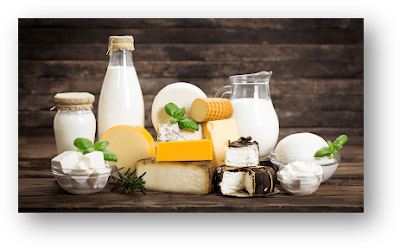
            Dairy Product
            Dairy Product

            Read: The Main Differences Between Braising and Stewing


            What is Dairy Product Dressing?

            • Dairy product dressing is the dressing that uses dairy products as main ingredients such as yogurt, cream cheese, blue cheese, cream, etc.
            • Must be kept chilled
            • Should be used up immediately or soon, as they have a short shelf life
            • Adjust seasoning and thickness before using
            • Excellent for fruit salads, jellied salads, dips, and spread. 
            • Such as  Blue cheese dressing, Yogurt dressing, Cream cheese dressing, Cream horseradish sauce, etc.

            Types of  Dairy Product Dressing

            • Yogurt Base: Mint yogurt dressing, Dill yogurt dressing, Creamy Greek yogurt dressing, Honey mustard yogurt dressing, Lemon yogurt dressing, etc
            • Cheese Base: Dressing: Horseradish dressing, Cream cheese dressing, Blue cheese dressing, Mascarpone cheese dressing, Feta cheese dressing,  etc.

            Dairy Product Dressing
            Dairy Product Dressing

            Read: 3 Types of Meringue in Culinary Knowledge


            Create Your Dairy Products Dressing


            7 Types of Ingredients for Dairy Dressing

            1. Dairy Product
            2. Oil
            3. Liquids
            4. Acidity
            5. Herbs
            6. Spices
            7. Other/ Garnish


            1. Dairy Product

            • The main ingredients
            • E.g. Yogurt, Cream cheese, Sour cream, Feta cheese, Mascarnope cheese, Goat cheese, etc.


            2. Oil

            • Add more flavor and texture
            • Salad oil, olive oil as additional ingredients to make dressing shinier. 


            3. Liquids 

            • Thinner agent and add flavor or taste
            • Portable water, Skim milk, Buttermilk, Cream, Fruit or vegetable juices, etc.


            4. Acidity

            • Add the taste and flavor
            • Such as citrus juice (lemon juice, lime juice, orange juice, grapefruit juice, etc.), vinegar (apple cider vinegar, white wine vinegar, white balsamic vinegar).


            5. Herbs

            • Add the taste and flavor
            • Fresh herbs such as Cilantro, Chervil, Chives, Italian parsley, curly parsley, Italian basil, Oregano, etc.


            6. Spices

            • Add the taste, flavor, and aroma
            • Saffron, Garlic, Onion, Ginger, Tahini, Turmeric, Cumin, White or black pepper, Mustard, etc.


            7. Other Ingredients/ Garnish

            • Add the taste, flavor, and texture
            • Puree vegetable or fruit, Chopped or Brunoise vegetable and fruit, Cured meat product, Parmesan cheese, seeds (sesame seeds, poppy seeds), etc.
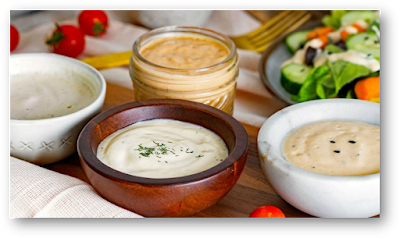
            Dressing Dish
            Dressing Dish

            Read: 9 Types of Salad Based on the Main Ingredients Used


            Simple Dairy Dressing Recipes

            1. Dill Yogurt Dressing

            • 1 cup. Plain yogurt 
            • 2 tablespoons. Chopped dill
            • 1 tablespoon. Lemon juice
            • 1 teaspoon. Minced garlic
            • 3 tablespoons. Olive oil
            • To taste. Salt and white pepper powder
            Method: Combine all ingredients


            2. Honey Mustard Yogurt Dressing

            • 1/2 cup. Greek yogurt
            • 1/4 cup. Olive oil
            • 3 tablespoons. Dijon mustard
            • 3 tablespoon. Honey
            • 2 tablespoons.  Lemon juice/ pineapple juice
            • 1 clove. Minced roasted garlic (wrapped garlic with aluminum foil before you roast)
            • To taste. Salt and cracked or crushed black pepper
            Method: Combine all ingredients


            3. Feta Cheese Dressing

            • 1 cup. Feta cheese, crumbled
            • 1/2 cup sour cream
            • 1/4 cup. Buttermilk as thinner agent
            • 1 teaspoon. Lemon zest
            • 2 tablespoons.  Lemon juice
            • 1 clove. Minced roasted garlic
            • To taste. Salt and crushed black pepper
            Method: Combine all ingredients


            4. Horseradish Dressing/ Sauce

            • 2 cup. Heavy cream
            • 1/2 cup. Cream cheese
            • 1/4 cup. Grated horseradish
            • 1 tablespoon. Lemon juice
            • To taste. Salt and white pepper powder
            • 2 tablespoons. Chopped chives as additional garnish
            Method: Mix all ingredients by food processor ( chives only for garnish)


            5. Blue Cheese Yogurt Dressing

            • 1/2 cup. Greek yogurt
            • 1/2 cup. Mayonnaise
            • 1/2 cup. Crumbled Gorgonzola cheese
            • 2-4 tablespoons. Buttermilk as thinner agent
            • 1 tablespoon. Lemon juice
            • To taste. Salt and white pepper
            Method: Combine all of the ingredients


            Dairy Dressing
            Kinds of  Dairy Dressing
            Honey Mustard Yogurt Dressing, Blue Cheese Yogurt Dressing &  Dill Yogurt Dressing


            Tuesday, November 12, 2019

            Top 10 Derivatives of Mayonnaise Dressing and Their Ingredients


            Cold Kitchen Knowledge: Mayonnaise


            What is Mayonnaise?

            • It is a thick cold dressing usually used in sandwiches and salads or as condiments.
            • Considered a permanent emulsion
            • It is a stable emulsion of oil, egg yolk, and lemon juice or vinegar
            • Good mayonnaise is creamy, pale ivory, not too acidic
            • Mustard is often added to give a little tartness

            Mayonnaise
            Mayonnaise

            Read: Sandwiches


            Mayonnaise and Food Safety

            • Avoid using fresh egg yolk for homemade mayonnaise recipe according to food safety regulation.
            • Uncooked shell eggs can sometimes be contaminated by Salmonella bacteria
            • Pasteurized egg yolk is a fresh egg yolk substitute for making homemade mayonnaise to reduce the possibility of food-borne illnesses.
            • Ready-made mayonnaise dressings are carefully formulated with highly acidic ingredients and pasteurized eggs and manufactured under rigorous quality control procedures

            Ready-Made Mayonnaise
            Ready-Made Mayonnaise
            Read: Types of Bread


            How to Make Mayonnaise

            Basic Mayonnaise Recipe

            • 4. Egg yolks
            • 1 L. Olive oil/ Salad oil
            • 1 tablespoon. White wine vinegar
            • 1-2 tablespoons.  Lemon juice
            • 1 tablespoon. Dijon mustard
            • To taste. Salt and white pepper

            Methods
            • Beat the yolks with a little water till frothy
            • Gradually add the oil, beating constantly
            • Add a little vinegar or acid as the mayonnaise gets stiff
            • Taste for quality of flavor, you may add additional seasoning
            • Add water as a thinner agent
            • Chill or serve immediately

            How to Make Mayonnaise
            How to Make Mayonnaise
            Read: Dipping Sauces


            Top 10 Mayonnaise Derivatives


            1. Aioli

            • For: Cold meat dishes 
            • Ingredients: Mayonnaise, Minced roasted garlic


            2. Thousand Island Dressing

            • For: Mixed salad, cold meat dishes, crudities and sandwich spread, etc. 
            • Ingredients: Mayonnaise, tomato ketchup, chopped onion, chopped red and green pimientos, chopped onion, sweet paprika powder.


            3. Tartar Sauce 

            • For: Fish & chips, deep-fried calamari,  fish finger, chicken nugget, etc.  
            • Ingredients: Mayonnaise, chopped gherkin, chopped onion, chopped parsley/ chives, chopped caper, and chopped hard-boiled egg.

            Mayonnaise Derivatives
            Mayonnaise Derivatives
            Aioli, Thousand Island and Tartar Sauce

            Read: 5 Types of Mother Sauces


            4. Remoulade Dressing

            • For: Deep fried, pan-fried fish, shellfish, and chicken.
            • Ingredients: Mayonnaise, chopped gherkins, chopped capers, chopped anchovy fillets or anchovy paste, chopped parsley.


            5. Cocktail Sauce

            • For: Shrimp cocktail or cold seafood dishes
            • Ingredients: Mayonnaise, tomato ketchup, Worcester sauce, Tabasco, and lemon juice.


            6. Honey Mustard Dressing 

            • For: Green salad, vegetable salad, and crudities
            • Ingredients: Mayonnaise, honey, Dijon mustard, yellow mustard, and apple cider vinegar.

            Derivatives of Mayonnaise
            Mayonnaise Derivatives
            Remoulade, Cocktail, and  Honey Mustard Dressing

            Read: Types of Bread


            7. Blue Cheese Dressing 

            • For: Salad, sandwich spread, dip, deep-fried fish or chicken
            • Ingredients: Mayonnaise, Gorgonzola cheese, lemon juice, and cream, or sour cream.

            8. Caesar Dressing

            • For: Caesar salad
            • Ingredients: Mayonnaise, minced roasted garlic, anchovies paste or chopped anchovies, grated Parmesan cheese.


            9. Chipotle Sauce

            • For: Crab cake, fish cake, sandwich spread, and deep-fried fish or chicken, etc.
            • Mayonnaise, blended chipotle chili, cumin powder, chopped cilantro


            10. Chantilly Dressing

            • For: Vvegetable salad, crudities, and Cold dishes
            • Ingredients: Mayonnaise, lemon juice, and mixed with whipped cream.
            Mayonnaise dressing derivatives
            Mayonnaise Derivatives
            Blue cheese, Caesar, and Chipotle dressing


            CHEF Q